
All 18 categories
Last updated:
BATTERIES NOT INCLUDED. OR INVITED.
Sunlight Projection Digital Sundial
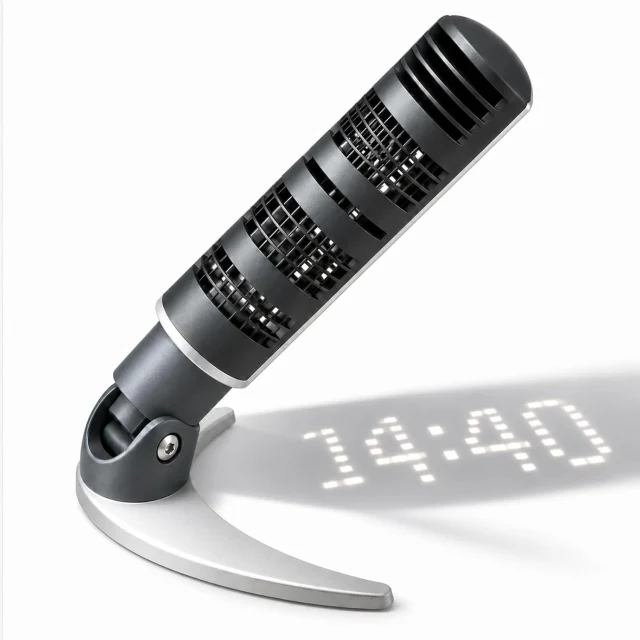
Your wall clock just got nervous. This digital sundial points a slotted 3D printed cylinder south, catches direct sunlight and projects sunlit numerals of approximate solar time, updating about every 20 minutes. Clouds get the day off.
As an Amazon Associate we earn from qualifying purchases. Prices and availability can change.
A solar powered clock with ancient monument confidence
Humanity Invented Atomic Time and This Cylinder Still Asks the Sun
The sun has been telling time for free since forever. It just never had good handwriting. This sundial fixes that with sunlit digital style numerals you can read on a patio table between about 10 AM and 4 PM.
Some clocks need batteries. Some need charging cables. This 3D printed digital sundial needs a clear sky and the giant fireball currently managing Earth’s lighting department.
The VAXYOR WJxg000057 sunlight projection digital sundial uses a slotted cylinder on an adjustable stand to project approximate solar time onto the surface below. Instead of an electronic screen, it turns direct sunlight and carefully arranged cutouts into glowing digital style numerals.
Setup is wonderfully dramatic for a tabletop object. Point the cylinder due south, adjust the stand’s angle to match your city’s latitude, and let geometry do its very smug little performance.
It updates about every twenty minutes as the sun moves, with listing images showing readings like ten forty, eleven, eleven twenty, and eleven forty. It generally works between ten in the morning and four in the afternoon, because apparently even a sundial believes in banker’s hours.
It will not work under indoor lighting, cloudy skies, or vibes. But in sunny gardens, patios, balconies, classrooms, homeschool lessons, and STEM demonstrations, it becomes a tiny Stonehenge that answers the deeply human question, what time is it if my phone is somehow not enough?
- What it is
- A 3D printed slotted cylinder on a stand that projects approximate solar time as digital style numerals
- Power
- None. No batteries, charging cables or electronics, just direct sunlight
- Setup
- Face it due south and tilt the stand to match your latitude
- Reading window
- Clear days, generally 10 AM to 4 PM, updating about every 20 minutes
Stonehenge Got a Software Update
Stonehenge had rocks. Ancient Egypt had obelisks. This thing has a 3D printed cylinder full of tiny precision cutouts and the confidence of a wizard with a protractor.
It is a digital sundial, which sounds like two eras arguing in a science museum.
The display looks like digital numerals, but there is no screen hiding in there. No batteries. No charging cable. No tiny exhausted computer wondering why it became a clock.
The sun hits the slotted cylinder, the internal geometry does its little light trick, and suddenly the surface below shows approximate solar time.
It needs to face due south, because apparently the sun has preferences and this clock is very serious about seating arrangements.
Then you adjust the stand angle to match your city’s latitude, which is the closest most patio decor gets to becoming a geography exam.
The display updates about every twenty minutes, slowly changing as the sun moves across the sky.
It is Stonehenge if Stonehenge had learned to write numbers and developed a strict no clouds policy.

Indiana Jones and the Dial of Mildly Useful Timing
A beam of sunlight reveals the secret. Not a lost temple. Not an ancient treasure. Just that it is approximately two forty and your snack timing is defensible.
This sunlight projection digital sundial has serious map room energy, except the treasure is knowing the time without asking a rectangle in your pocket.
The cylinder sits on its stand, covered in carefully placed openings that only make sense once direct sunlight gets involved.
When the sun hits it correctly, the shadow and light pattern projects digital style numerals onto the surface below.
It is not clock time from your phone. It is approximate solar time, which is time as judged by the sky and possibly several smug philosophers.
The listing says it generally reads between ten in the morning and four in the afternoon, which gives it the work ethic of a clock with excellent boundaries.
Clouds ruin the adventure. Indoor lighting does nothing. The sun is not optional here.
Doc Brown needed one point twenty one gigawatts. This just needs a clear afternoon and the humility to point south.
Here Comes the Sun, There Goes Your Charging Cable
Modern life says every object needs a battery, an app, a firmware update, and a tiny light that blinks at three in the morning.
This 3D printed digital sundial says absolutely not.
It has no electronic display, no batteries, and no charging cable. The sun pays the electric bill, which is nice because the sun has been freelancing for billions of years.
The cylinder uses direct sunlight, shadows, and internal geometry to make numbers appear like a digital clock forgot it was supposed to be electronic.
It is best for sunny outdoor spaces, STEM demonstrations, classroom curiosity, homeschool science lessons, and people who think geometry deserves more applause.
The adjustable stand lets you set the angle for your latitude, because this is not a lazy garden ornament. This is a small science project wearing clock pants.
It will not help during a storm, at night, or under indoor lighting. That is not a flaw. That is commitment to the theme.
It is a clock that refuses electricity, rejects cloudy nonsense, and only reports for duty when the sun clocks in first.
QUESTIONS ASKED IN BROAD DAYLIGHT
Digital Sundial Questions Before You Ask the Sun
How does a digital sundial work without batteries?
It runs on geometry and one very large star. The listing says this sunlight projection digital sundial sends direct sunlight through precision cutouts in its 3D printed cylinder and projects sunlit digital style numerals onto the surface below. There is no screen, no battery and no charging cable. As the sun moves across the sky, the light pattern changes and the display updates about every 20 minutes. Your power bill will never hear about it.
How do you set up a digital sundial?
Think of it as the world's most particular sunflower. Point the cylinder due south, then adjust the stand's angle to match your city's latitude, which lines up the cylinder's tilt with the sun's altitude. A listing image shows the angle joint adjusting from 0 to 90 degrees. Look up your latitude once, set the stand, and the sundial handles the rest as long as the sun shows up for work.
Does the digital sundial work indoors or on cloudy days?
No, and it is refreshingly honest about it. The listing says direct sunlight on a clear day is required, and overcast skies or indoor lighting will not work. Readings are generally possible between 10 AM and 4 PM. That makes it a sunny garden, patio, balcony or outdoor desk gadget rather than a nightstand clock. On gray days it is simply a very handsome geometry sculpture waiting for the clouds to leave.
Is sundial time the same as the time on my phone?
Not exactly, and that is part of the charm. The listing says this sundial shows approximate solar time, which is based on where the sun actually sits in the sky. Your phone shows clock time set by time zones, so the two can disagree a bit. When you need to catch a train, trust the phone. When you want to read the time straight from the sky like an ancient astronomer, the sundial wins on style.
Can a digital sundial tell time at night if I shine a flashlight on it?
Bold plan, but no. The listing says the sundial needs direct sunlight on a clear day and that indoor lighting will not work, so a flashlight is not on the approved list. Readings are generally possible between 10 AM and 4 PM, when the sun is where the cylinder expects it. Waving a flashlight at it at midnight mostly proves how badly you want to know the time. After dark, the microwave clock remains undefeated.
Is a digital sundial a good gift for someone who already owns every gadget?
It might be the one gadget they never have to charge. The listing pitches this 3D printed sundial for gardens, patios, balconies, outdoor desks, classrooms, homeschool activities and science demonstrations, plus gifts for astronomy, engineering, geometry and maker fans. It needs no batteries or cables. For more science you can stare at, see the Dancing Ferrofluid Magnetic Display, or browse more Home Decor finds.
This Is What Disposable Income Was Made For.
THE RABBIT HOLE CONTINUES
One weird thing leads to another.
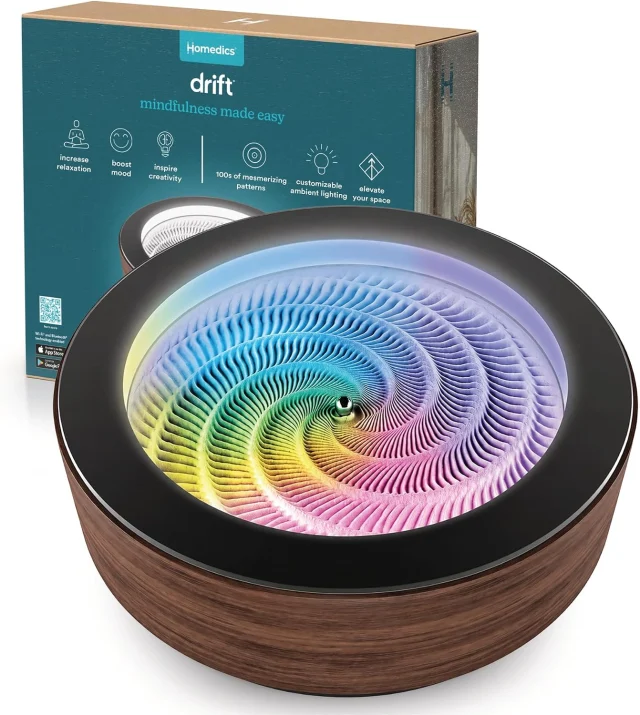
Need a relaxing desk toy? The HoMedics Drift Sand Table uses a magnetic ball to draw intricate patterns through sand. Choose designs through the app,...

Because looking out the window is apparently too easy. This Teardrop Storm Glass contains liquid that forms changing crystals as temperatures shift. It's a fascinating...